Bathroom paint colors that work with your light and tiles
Bathrooms are tricky rooms to paint. They are often small, sometimes windowless, full of steam, and already half covered in tile you may not want to change. The good news is that because there is so little wall to paint, colour has a big effect for very little effort. The key is to choose it with the light, the finish and the tiles in mind, not from a swatch alone.
Start with the light
The same paint can look completely different from one bathroom to the next, mostly because of the light. Before choosing a colour, look at where the light comes from and when you use the room.
- North-facing windows (in the northern hemisphere) give a cool, even light. Cool greys and blue-whites can look cold and flat here. Warmer colours, such as a white with a hint of yellow, soft greige or a muted clay, balance it out.
- South-facing windows give warm, bright light for much of the day. Most colours look good, and cooler shades like soft blue or grey-green stay fresh rather than chilly.
- East and west windows change through the day. Check your sample in the morning and the evening, when you are most likely to use the bathroom.
- No window at all means the colour depends entirely on your bulbs. Test the paint under the light you actually have, and choose warm bulbs if you want the room to feel softer.
Always paint a large sample, or a sample board, and look at it beside your tiles and basin. A small chip in a shop will not tell you much.
Pick a finish that copes with steam
Finish matters more in a bathroom than anywhere else in the house. Flat matt paint looks soft, but standard versions mark easily and can struggle with damp.
- Satin or soft sheen is a common choice for bathroom walls. It wipes clean and handles condensation better than flat paint, without the shine of gloss.
- Semi-gloss is the most practical for woodwork, doors and walls right beside a shower or bath, where splashes are frequent.
- Bathroom-specific matt paints exist for people who want a chalky look. Check the label for moisture and mould resistance before you buy.
Good ventilation is as important as the paint. An extractor fan, or opening a window after a shower, will help any finish last longer and keep mould away.
Small bathrooms versus large ones
The best paint colors for a small bathroom are not always the palest. Light colours do reflect more light, and a warm white or pale greige is a safe start in a cramped room. But a small bathroom is also a good place to be braver, because you use it for short spells and the area of paint is small.
A deep colour carried over all the walls, and sometimes the ceiling too, softens the corners and makes a small bathroom feel cosy and deliberate. It tends to work best when the tiles are plain white or a quiet neutral.
In a large bathroom, very pale colours can feel a little empty. Mid-tones such as sage, dusty blue or soft clay add warmth and make the room feel finished. You can also use colour to define areas, for example a darker shade behind the bath or around the vanity.
Colour families that suit bathrooms
Warm whites
A white with a little yellow or red in it feels clean without being harsh. It suits most tiles and fixtures, and works well in bathrooms with cool or little natural light. Pure brilliant white can look blue and clinical next to white sanitaryware.
Greige
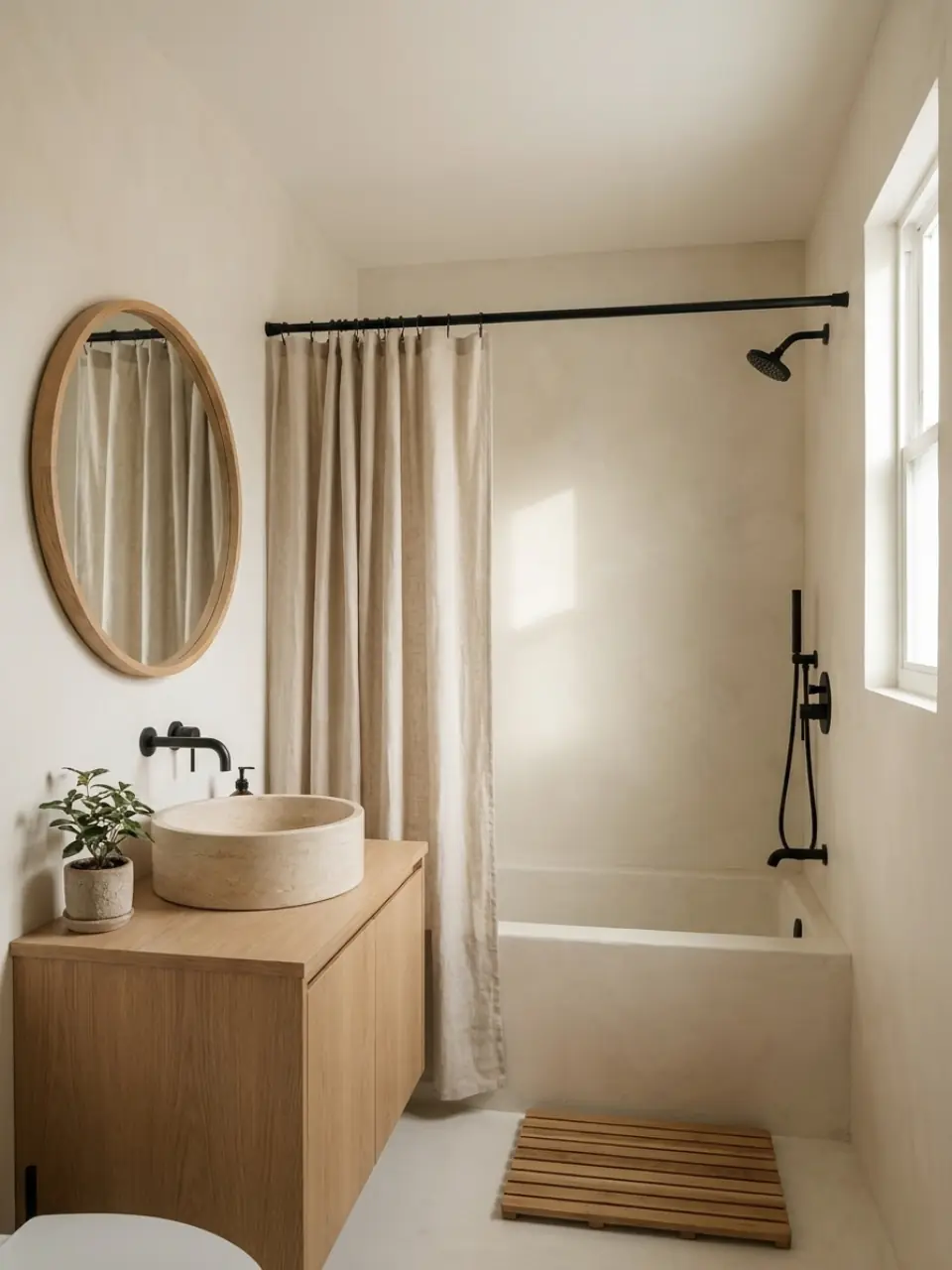
Greige sits between grey and beige. It is calm, hides small marks well, and pairs easily with both wood and stone. It suits Scandinavian bathrooms and Japandi bathrooms, where warm grey and sand tiles meet light oak.
Sage and grey-green
Soft green brings a natural, fresh feel and looks good with plants, wood and brushed metal. A muted sage suits a Scandinavian or Japandi scheme, and a deeper green works well in a luxury bathroom beside marble and brass.
Blue
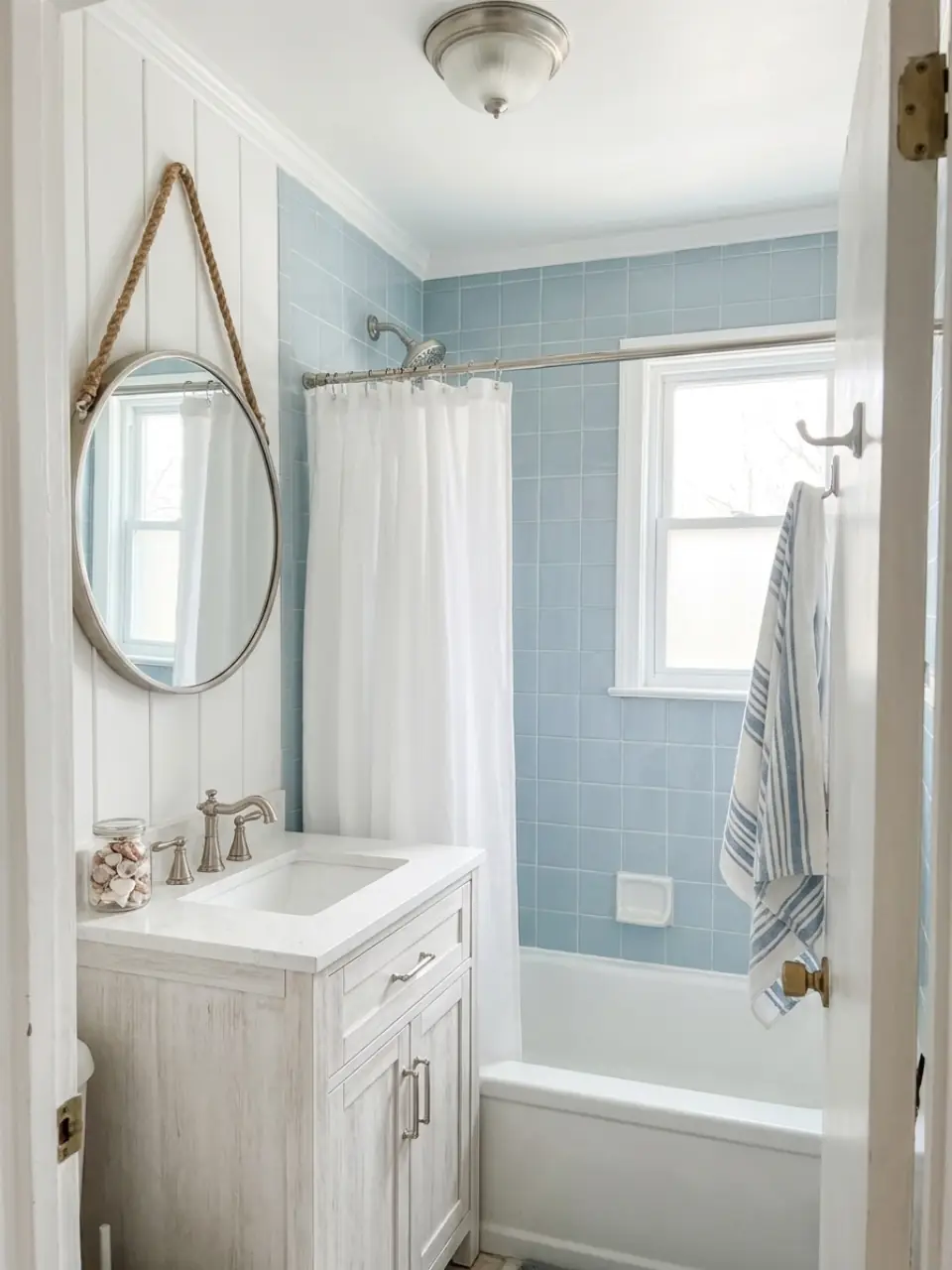
Blue is a natural fit for a room full of water. Pale blue-grey feels airy, while a mid sea blue or aqua is the base of a coastal bathroom. Keep the walls light and use stronger blue in one zone, such as the shower tiles, so the room stays fresh rather than cold.
Dark and moody
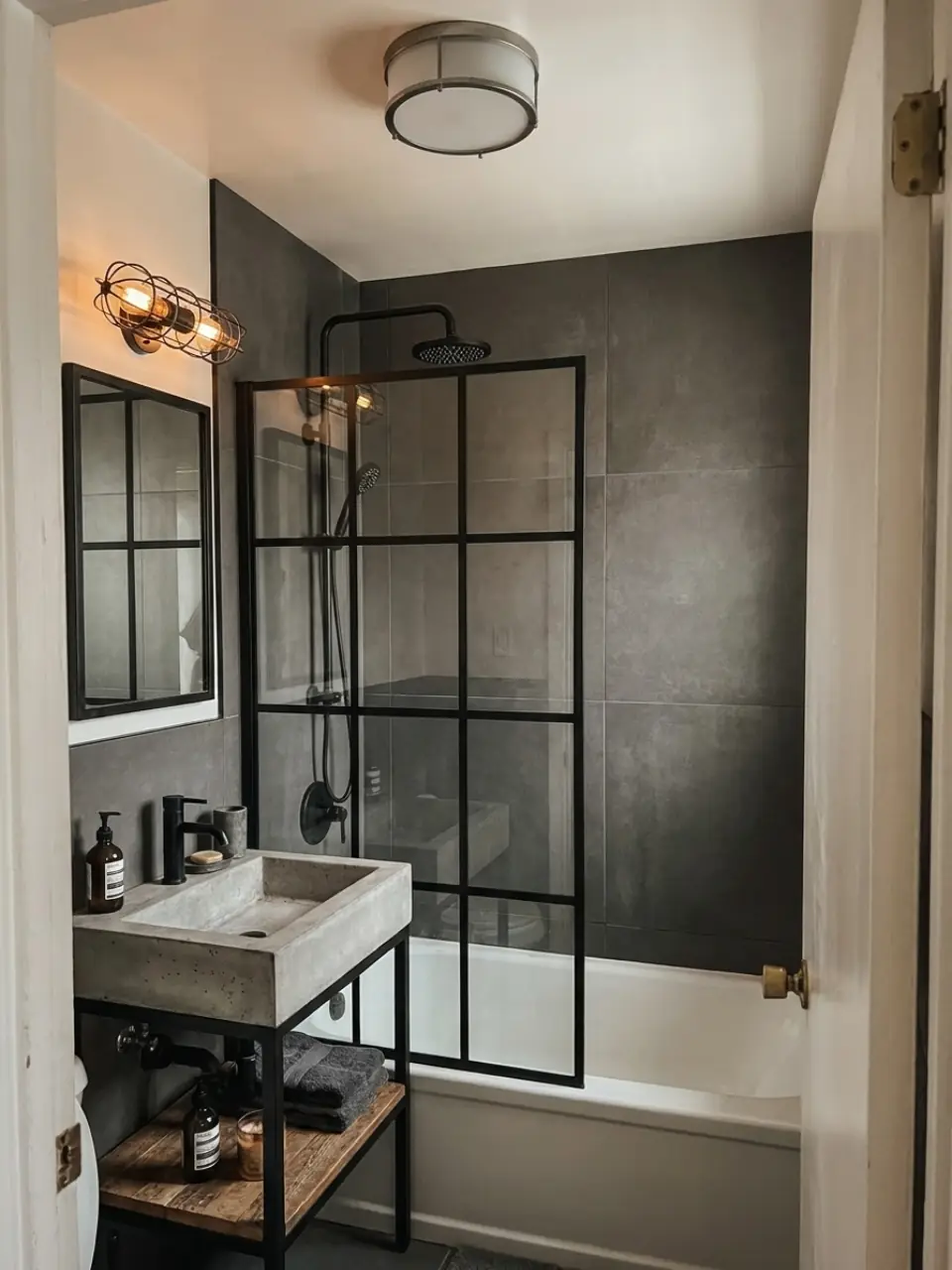
Charcoal, deep slate, inky blue and forest green make a bathroom feel enclosed and calm, especially at night under warm light. They suit an industrial bathroom with concrete and black metal. Dark walls show water marks and dust more than mid-tones, so a wipeable finish matters here.
Terracotta and clay
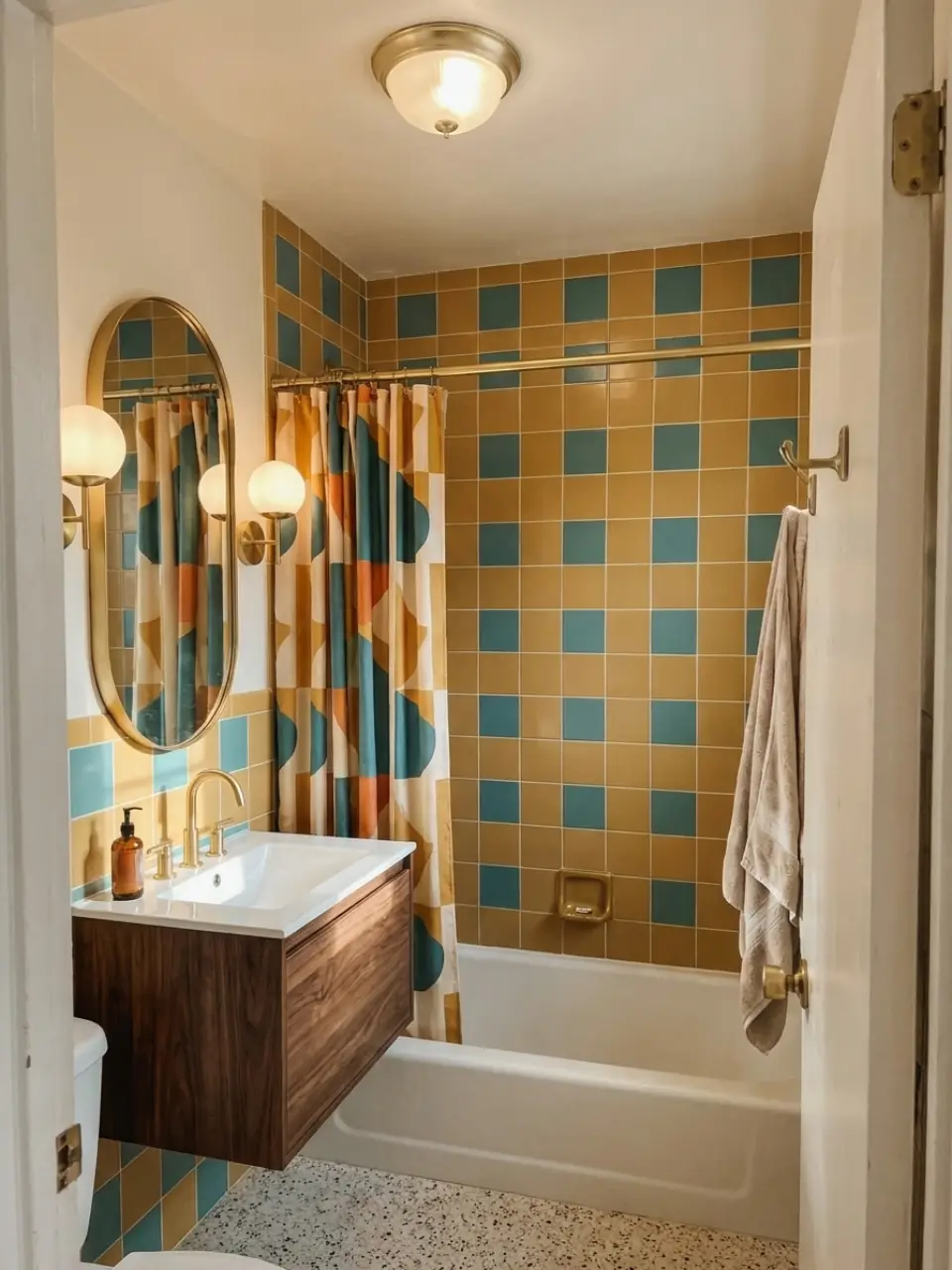
Earthy pinks, clay and soft rust feel warm and relaxed, and they flatter skin tones in the mirror. They suit a boho bathroom with zellige tiles, rattan and plants, and they also pair well with walnut in a mid-century bathroom, where olive, mustard or blush tiles set the tone.
Pair paint with tiles and fixtures
In most bathrooms the tiles and fittings stay, so the paint should work with them rather than against them.
- Look at the undertone of your tiles first. Cream, beige and sand tiles have warm undertones and clash with cool blue-greys. Bright white or cool grey tiles look better with cooler or clean neutral paints.
- Pull the paint from a colour already in the room, such as the vein in a marble tile or the grout, for a calm result.
- If the tiles are busy or strongly coloured, keep the walls quiet. Let one thing lead.
- Match the mood to the metal. Brushed brass and warm bronze sit well with greens, clay and warm whites. Chrome and brushed steel suit whites, greys and blues. Matte black works with almost anything, especially greige and dark shades.
- Remember the ceiling. In a small bathroom, painting it the same colour as the walls, or a lighter tint of it, avoids a hard line where the walls end.
Common mistakes
- Choosing a colour from a chip under shop lighting.
- Using flat matt paint that is not made for damp rooms.
- Picking a cool grey for a north-facing or windowless bathroom.
- Ignoring the undertone of tiles you are keeping.
- Painting one feature wall in a very small bathroom, which can make it feel shorter rather than larger.
See it in your own bathroom
Paint is easy to change, but it is still nice to know before you start. Take a photo of your bathroom and try a few styles on it with Homiva to see which colours sit best with your tiles and light.